Rubber Testing Lab for High Quality Material Certification

A rubber testing lab plays a crucial role in ensuring high quality material certification for various industrial applications. Rubber components are widely used in automotive, construction, and manufacturing sectors where performance and safety are critical. Accurate testing ensures that materials meet strict quality standards and perform reliably under different conditions.
Material certification helps manufacturers validate the strength, durability, and performance of rubber compounds. By conducting detailed tests such as tensile strength, elasticity, and resistance to environmental factors, testing labs provide valuable insights into product quality. This enables manufacturers to improve formulations and maintain consistent standards.
High quality certification also enhances customer trust and brand reputation. Products that meet certified standards are more likely to perform reliably, reducing the risk of failure and ensuring long-term satisfaction for end users.

Role of Certification in Product Quality Assurance
Certification is essential for ensuring that products meet industry standards and regulatory requirements. It provides assurance that materials have been thoroughly tested and are suitable for their intended applications. This is especially important in industries where safety and reliability are critical.
The process of tyre certification involves comprehensive testing to evaluate durability, traction, load capacity, and resistance to wear. Certification ensures that tyres meet global safety standards and deliver consistent performance in real-world conditions.
In addition to safety, certification supports market expansion. Products that meet international standards can be easily introduced into global markets, helping manufacturers increase their reach and strengthen their competitive position.
Advanced Testing Methods for Accurate Certification
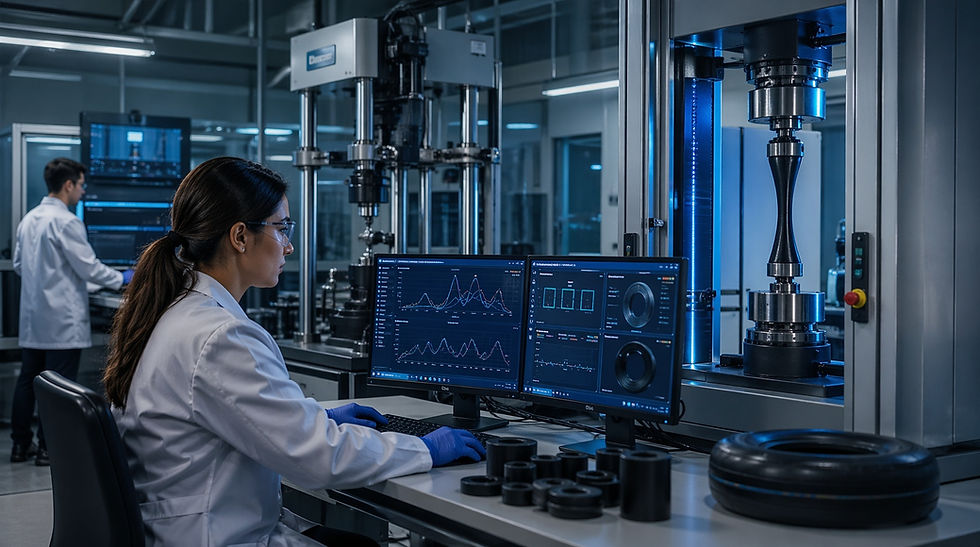
Modern testing laboratories use advanced technologies to ensure accurate and reliable certification results. Equipment such as rheometers, tensile testing machines, and environmental chambers allow engineers to simulate real-world conditions and evaluate material behavior precisely. These tools provide detailed insights into product performance.
Testing methods include both physical and chemical evaluations. Physical tests assess properties such as hardness, elongation, and resilience, while chemical tests examine resistance to heat, chemicals, and environmental degradation. This comprehensive approach ensures that materials meet all required specifications.
Automation has further improved testing efficiency and accuracy. Laboratories can generate detailed reports quickly, enabling manufacturers to make informed decisions and optimize their production processes for better outcomes.
Role of Elastomer Testing in Material Certification
Specialized testing facilities are essential for evaluating elastomer materials used in various industrial applications. These materials must meet strict performance criteria to ensure durability and reliability. Testing labs follow standardized procedures to maintain accuracy and consistency.
An elastomer testing lab plays a vital role in analyzing rubber compounds and ensuring they meet mechanical and chemical requirements. These labs conduct detailed evaluations that support high quality material certification and compliance with industry standards.
By utilizing specialized testing services, manufacturers can reduce variability in material performance. This leads to improved product consistency, enhanced durability, and increased customer satisfaction.
Driving Quality Excellence Through Testing Solutions
Testing laboratories are not only focused on certification but also contribute to continuous improvement and innovation. By analyzing material performance, they provide insights that help manufacturers develop better products with enhanced quality and efficiency.
Organizations like HASETRI play a significant role in delivering reliable testing solutions that support high quality material certification. They offer comprehensive services that help industries meet evolving requirements while maintaining strict quality standards.
As industries continue to evolve, the demand for accurate and reliable testing will increase. Investing in advanced testing solutions ensures that products remain competitive, safe, and aligned with global quality standards.


Comments