Turning material data into measurable NVH performance gains

Measurable gains in refinement begin with a clear understanding of material behavior during NVH testing. Noise and vibration characteristics are strongly influenced by how polymers respond to dynamic loads, temperature changes, and long term usage. Without accurate material data, NVH development often relies on assumptions that limit consistency and predictability.
By focusing on data driven polymer testing, engineers can quantify stiffness, damping, and durability with greater precision. These measurable properties form the basis for identifying vibration sources and controlling sound transmission. When material behavior is clearly defined, NVH performance targets become achievable and repeatable.
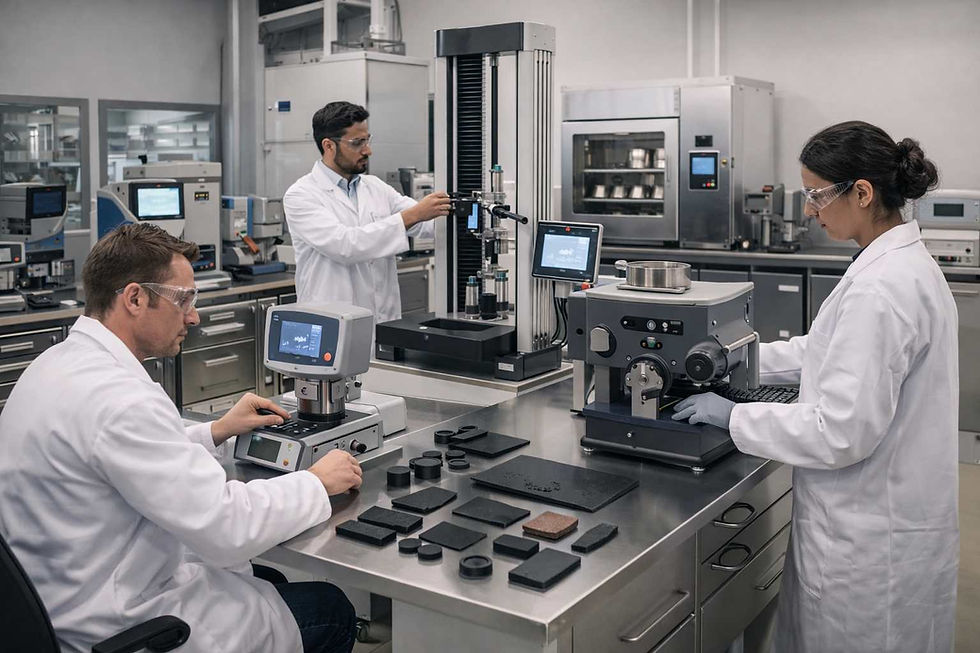
Linking Material Data to Vehicle Dynamics Outcomes
Material performance plays a crucial role in shaping vehicle dynamics, particularly within suspension and chassis systems. Elastomeric components influence compliance, energy absorption, and load transfer, all of which affect ride comfort and handling stability. Variations in material properties can lead to inconsistent dynamic behavior and reduced comfort.
Using validated data from polymer testing, engineers can improve the accuracy of vehicle dynamics simulations. Reliable material inputs ensure that virtual models closely represent real world behavior. This alignment allows tuning decisions to be made earlier and reduces the need for late stage corrective actions.
Enhancing NVH Testing Through Data Driven Evaluation
Effective NVH testing depends on understanding how materials behave across a wide frequency range. Polymers exhibit complex responses that change with excitation levels and operating conditions. Without measured data, identifying vibration paths and resonance risks becomes difficult.
Advanced polymer testing captures frequency dependent stiffness and damping characteristics. This information enables engineers to design targeted isolation strategies and reduce unwanted vibration. As a result, NVH solutions become more efficient and deliver measurable improvements in acoustic comfort.
Importance of Polymer Testing Labs in Performance Validation
A dedicated polymer testing lab provides the controlled environment required for accurate and repeatable material evaluation. These laboratories simulate real operating conditions through mechanical, thermal, and dynamic testing. Such controlled testing ensures material behavior remains consistent throughout the vehicle lifecycle.
Data generated in a polymer testing lab feeds directly into simulation and physical validation activities. Improved correlation between laboratory results and vehicle level performance increases confidence in both NVH testing and vehicle dynamics decisions. This reliability supports predictable development timelines and measurable refinement gains.

Converting Material Insights into NVH Performance Gains
Turning material data into real world refinement requires integration across development disciplines. When polymer testing, NVH testing, and vehicle dynamics analysis work together, material insights can be translated into clear performance improvements. Early validation of material behavior reduces uncertainty and supports consistent refinement across vehicle platforms.
This integrated approach is strengthened through collaboration with a rubber research lab, where material formulations are optimized to meet specific performance goals. Final verification in a rubber testing lab confirms durability and real world reliability. By combining insights from NVH testing, vehicle dynamics, polymer testing, and a polymer testing lab, supported by a rubber research lab and rubber testing lab, manufacturers achieve measurable NVH performance gains, reduced development risk, and improved vehicle refinement.
Also Read :


Comments